Moscow and Copenhagen · born 1935
Igor Novikov
Send a billiard ball back through a wormhole so that it knocks its younger self away before it can enter. Igor Novikov's answer was that the ball will never do it: only consistent histories happen.
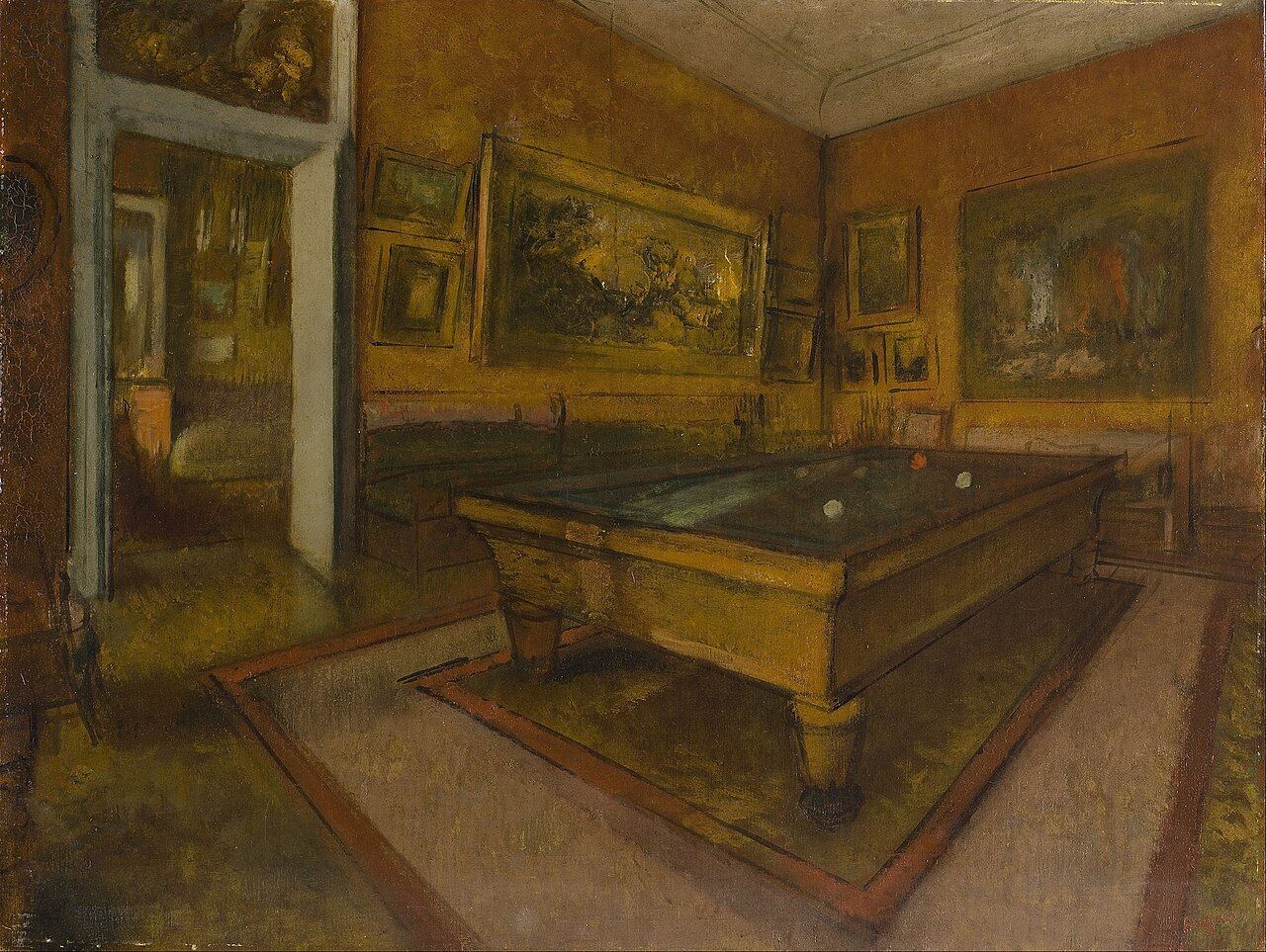
The view
Novikov, a Russian astrophysicist who later worked in Copenhagen, proposed what is now called the Novikov self-consistency principle. Near a time machine, the laws of physics admit only solutions that are consistent all the way round every loop. A traveller cannot change the past, not because something stops her, but because a history in which she changes it is not a solution of the equations. In 1990 he set it out with John Friedman, Michael Morris, Kip Thorne and others in "Cauchy Problem in Spacetimes with Closed Timelike Curves" (Physical Review D).
The argument
The test case came from Joseph Polchinski, who posed the billiard-ball paradox. A ball enters one mouth of a wormhole time machine, emerges from the other mouth earlier, and strikes its younger self so that the younger self never enters. Fernando Echeverria, Gunnar Klinkhammer and Thorne studied the problem (1991) and found that for the starting conditions they examined, there were always consistent solutions: the emerging ball gives its younger self a glancing blow that sends it into the mouth on just the path needed. For some starting conditions they found many consistent solutions, and no rule for choosing between them.
Where he meets Deutsch
Novikov treats the paradoxes as a problem in physics, to be answered by the equations, not by philosophers' intuitions, and he concludes, as Deutsch does, that time travel need not be inconsistent. Both think that physics, properly understood, already contains the answer.
Where he parts from Deutsch
They give opposite answers. Novikov keeps a single history and requires it to be consistent, so attempts to change the past fail. Deutsch notes that the paradoxes have traditionally been taken to show that travellers would somehow lose their freedom, and rejects that: in the multiverse a traveller can do as she likes. In the quantum version, Deutsch's model always has a solution for every loop, whatever goes into it, where the classical billiard-ball problems were not guaranteed one and often had many.
| Novikov | Deutsch | |
|---|---|---|
| Is travel into the past possible? | Yes, in principle, if the laws of physics allow time machines. | Not yet known. General relativity allows closed timelike curves; whether the full laws of physics do waits on a quantum theory of gravity. |
| What happens if you try to change the past? | You cannot. The only events that can happen are those consistent with the whole history, so attempts on the past fail. | You cannot change your own past, because you never arrive in it. In the past you do reach, you can do as you choose, and history there goes differently. |
| Where does the traveller arrive? | In your own past, in the one history. | In another universe of the multiverse, at an earlier time: a past that differs from your own from the moment you arrive. |
| What resolves the paradoxes? | The self-consistency principle: the solutions of physics near a time machine must be globally consistent. | Quantum theory applied to the loop. The multiverse as a whole is always consistent, and any knowledge a traveller brings was created by someone. |
Further reading
- Igor Novikov, The River of Time (1998).
- John Friedman, Michael Morris, Igor Novikov and others, "Cauchy Problem in Spacetimes with Closed Timelike Curves", Physical Review D (1990).
- Kip Thorne, Black Holes and Time Warps (1994), chapter 14; see Thorne.