The Fabric of Reality, chapter 12
Back to another past
If you could travel into the past, could you stop yourself from setting out? David Deutsch argues that you could, and that nothing would go wrong, because the past you reached would not be your own.
Deutsch is a physicist at Oxford and a pioneer of quantum computation. Chapter 12 of The Fabric of Reality (1997), "Time Travel", is the clearest statement of his view, and it rests on two others: his paper "Quantum mechanics near closed timelike lines" (1991), which supplies the physics, and his article with the philosopher Michael Lockwood, "The Quantum Physics of Time Travel" (Scientific American, 1994). This page sets out the chapter whole, in our own words, in nine steps. Six of the figures respond to you: you can fly a twin to a star, go round a revolving door into the past, try to enact a paradox, send a bit round a time loop, carry a play back to its author and bend spacetime until it closes. The comparisons with other thinkers are on the thinker pages.
1. The puzzle: what is time travel?
In science fiction a time machine is a vehicle. You set a dial to a date, wait while the machine does its work, and step out among robots and starships, or among ruins, or among dinosaurs. If you landed in the age of the dinosaurs you could check the date for yourself. Physics provides many natural calendars, from the shapes of the constellations to the proportions of radioactive elements in rocks, and when they are properly calibrated they agree.
Deutsch begins from these calendars. On his picture, which the time site sets out, the world is a collection of snapshots, each a whole universe at one moment, and the date that calendars measure is a property of a whole snapshot. Time travel is then any process that makes two intervals come apart: the interval between two snapshots, as the calendars measure it, and the time the traveller experiences between being in one and being in the other. You can measure your own time by a clock you carry, by how much you have aged or by how much thinking you have done.
If much more time passes outside than you live through, you have travelled into the future. If you see the calendars show a date and later, by your own reckoning, see them consistently show an earlier one, you have travelled into the past. The two are very different. Only the second, Deutsch says, really deserves the name.
2. Into the future
Travel into the future is the easy kind, and we do a little of it every night. When you sleep, less time passes for you than for the clocks. Someone who woke from a coma of many years could be said to have travelled that far ahead, except that their body aged by the outside clock rather than their own. Deutsch suggests that slowing down a whole body, in the way he imagines slowing down a virtual-reality user's brain, would do the job properly.
Einstein's special theory of relativity offers a gentler method. An observer who accelerates and decelerates experiences less time than one who stays at rest. An astronaut who flies to a star at close to the speed of light and comes back finds that more time has passed on Earth than on board, and by accelerating hard enough she can make the gap as large as she likes. This is time dilation, and it has been measured with atomic clocks flown round the world.
But such a journey is one-way. Coming back would need travel into the past, and no amount of time dilation will return a spaceship before it left. Nor does the trick run backwards: speeding up a brain does not send it into the past. The outside world only seems to slow, and at the impossible limit of infinite speed it would seem to freeze. Deutsch calls that "present-directed" time travel, and recalls wanting a machine for it while revising for exams.
Two clocks
3. Snapshots, and nothing that moves
Chapter 11 of The Fabric of Reality argues that the idea of moving through time, as we move through space, does not make sense. Common sense pictures a present moment travelling along a line of times, lighting up each one as it passes. Deutsch rejects it. There is no moving present and nothing that moves along the line. Each moment is a snapshot, a whole universe at one instant, and snapshots do not change. What we experience as the flow of time is the way the snapshots are related to one another, and the way they contain memories and records of one another.
He adds that the snapshots are more numerous than the picture of a single line suggests. In quantum theory there are many snapshots at each moment, versions of the universe in which different things happen, and the stack of them that our experience follows is only approximately a single history. Time, as he puts it in the title of that chapter, is the first quantum concept.
For time travel, this does two things. It rules out one picture straight away: if no snapshot ever changes, then "changing the past", in the sense of altering a moment that has already happened, cannot be what a time traveller does. And it prepares the ground for what a time traveller could do instead, which section 7 sets out. The full case for the snapshot view is on the time site, and the case for the multiverse on the reality site.
4. Rendering the past
Deutsch's method for the rest of the chapter is unusual. Instead of asking directly whether time travel is possible, he asks whether it could be rendered in virtual reality. The reason is the Turing principle, which his book defends: a universal virtual-reality generator can be built, and can be programmed to render any physically possible environment. So if no program could render travel into the past, travel into the past would be physically impossible. And if one can, we learn at least what such travel would be like.
Rendering a past era is no problem in principle. A generator could show you the age of the dinosaurs or the trenches of 1916, with the constellations and the dates on the newspapers right. But playing a recording of the past would only be image generation. Virtual reality must be interactive. Take Dr Johnson, who refuted idealism by kicking a stone, to ancient Rome, and he will test the rendering the same way: he will kick the rocks, and address Julius Caesar in Latin and expect an answer. The program must work out how the historical world would have responded to him.
Here the trouble seems to start. The moment the rendered Caesar answers Johnson, the rendering stops being faithful to history, because the real Caesar never met Johnson. A rendering can follow history or respond to the user, it seems, but not both, which is the paradox of time travel in another form. Deutsch's reply is that faithfulness to what actually happened was never the aim of virtual reality. When you start to play tennis on a rendered Centre Court, it behaves differently from the real one, and that is what accuracy requires. Only the starting state of a rendering must match the original; after that, what must be faithful is how it responds. Time travel seems paradoxical for a different reason: the user plays more than one part. Copies of the user may meet, and the generator must render the user while also responding to the user.
5. The revolving door
The thought experiment at the centre of the chapter. You switch on a time-travel program and find yourself in a futuristic laboratory with a clock on the wall, showing noon. In the middle stands a revolving door, sealed inside an opaque cylinder with a single entrance, turning steadily. A sign over the entrance calls it a pathway to the past. The instructions say that if you go round once and step out, it will be five minutes earlier in the laboratory. By the time you have read them, it is five past twelve.
A real time machine, Deutsch says, would be like this: not a vehicle you drive into the past but a place, or a path, that you go through. He also puts a switch by the entrance, with two settings.
With interaction off, the generator only plays back what has happened. You step out at noon and see your earlier self reading the sign and the instructions. He cannot see you, and nothing you do affects him; if you stand in his way he walks straight through, or pushes you aside. At five past twelve he walks into the door. Follow him and you come out at noon again, now with two earlier selves, the second of whom can see the first but not you. Go round again and there are three. Eventually the door is too crowded to take you, and you must stay in the laboratory's future. This, Deutsch says, is what a real time machine would be like too: a place with a limited capacity for traffic into the past. And because it is a place, it reaches back only to times when it existed. No time machine can take anyone back to before it was built.
The generator now holds several records of the same five minutes, one with one of you in it, one with two, and so on. Which is the real history? Deutsch considers the answers. Perhaps only the last, the fullest. Perhaps only the first, since it is the only one you lived through interactively. Or perhaps all of them. You remember living through several histories of the laboratory between noon and five past, one after another, though from the laboratory's point of view they all happened in the same five minutes. Recording them needs many snapshots for each moment on the clock. This was a rendering of parallel universes, and that last answer, he says, is closest to the truth.
The revolving door
6. The paradoxes
Now the paradox. I build a time machine, travel back and stop my former self from building it. Then there is no machine, I never travel, and nobody stops the building. So do I make the trip or not? The usual version has the traveller kill his grandfather before his parent is born, which invites the hope that the traveller will somehow lose the fight. Deutsch removes the violence. Suppose I decide that if my future self visits me today, having set out tomorrow, then tomorrow I will not use my machine, and that if no one visits, I will. If I use it, I don't; if I don't, I do.
A contradiction means an assumption has failed, and two have usually been blamed. The first is the time machine itself: the paradoxes have long been taken as proof that time travel is impossible. The second is free will: perhaps time travellers would somehow be unable to form such intentions, or would forget them on the way. Deutsch rejects both. The faulty assumption is the classical theory of time, which the previous chapter showed to be untenable for quite different reasons.
Switch the revolving door to interaction on, and copies of you come out of it as soon as the session begins. They are your future selves, arriving to use their right to affect the laboratory at noon. Ignore them and copy what you saw them do, and the generator can keep up a single tidy history. But you are free to talk to them instead, and they pass every test of being you from a few minutes on: they remember reading the instructions, going round the door, arriving at noon. They fail one test only. Once you have been round the door yourself, you find that you need not do what you remember them doing, and that the copy of you who is now just starting does not do what you remember doing. They are you from a future, but not from yours.
Then the ultimate test. You resolve to enact the paradox, and the door does not refuse. Will someone come out at noon? Yes, and no: it depends which universe you mean. In one, no one comes, so at five past twelve you go round. You arrive at noon in the other universe, where a version of you, with the same intention, sees you emerge and so stays put. From then on that universe has two of you, and yours has none. Both copies carried out the plan, and nothing contradictory happened. Universes have no hidden serial numbers, so there is no fact about which copy you were before you differed. A generator would render this by tossing a fair coin for which role you play, and a fair coin is one that lands each way in half the universes in which it is tossed. That, Deutsch says, is exactly what would happen with a real time machine.
Enact a paradox
Your intention: if someone comes out of the door at noon, never use it; if no one comes, go round at five past and arrive at noon.
7. Changing the past
Is this really time travel, or only travel between universes? Deutsch insists it is time travel. You can return to a snapshot you have been in before, if you change nothing, as in the contrived case where you mimic your copies exactly. What you cannot do is change a specific snapshot you remember being in, turning it into a different one. But that was never a coherent wish. It comes straight from the classical picture of a flowing time, against which a snapshot might be thought to change.
His positive account is this. Changing the past means choosing which past snapshot to be in, not altering one. In exactly that sense we change the future whenever we choose: we make it different from what it would have been, had we chosen otherwise. No snapshot in the future changes either; there is no flow of time for it to change against. Changing the future means choosing which future snapshot we will be in, and changing the past, if we ever gain access to it, would mean the same.
So travel into the past is coherent, but only in a multiverse, and only if the laws of physics connect universes in the right way. If I will not use the machine whatever happens, no travelling version of me must arrive in my universe. If I certainly will, my universe must connect to one where I also do. If I try to enact a paradox, it must connect to one where a copy with my intention ends up behaving differently. Remarkably, Deutsch says, that is just what quantum theory predicts. His 1991 paper gives the mathematics. Its simplest case is below. Travellers keep exactly the freedom they would have if the path did not lead into the past, and time travel never becomes inconsistent.
The grandfather circuit
8. The knowledge paradox
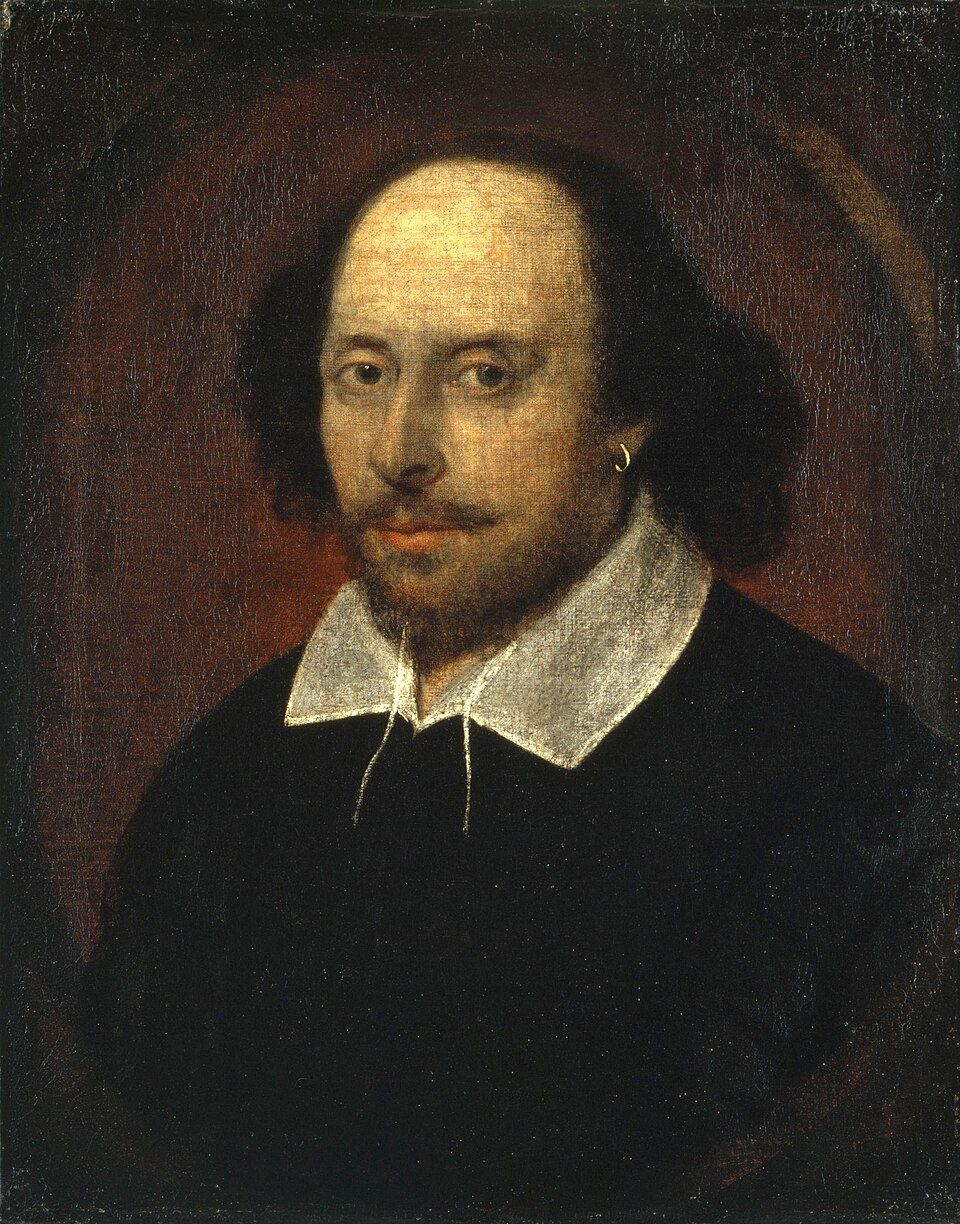
There is a second paradox, which creates no contradiction and so has been discussed more by writers of fiction than by physicists. Among philosophers, Deutsch notes, Michael Dummett took it seriously. A historian travels back to Shakespeare while he is writing Hamlet and shows him the "To be or not to be" speech, brought from the future. Shakespeare likes it and puts it in the play. In other versions the traveller replaces Shakespeare and passes off the plays as his own, or finds that there never was another Shakespeare, and that he himself has become him.
Each story is a consistent circle of events. What is wrong is that great literature comes into existence that nobody wrote. That contradicts what we know about where knowledge comes from. On the account the book sets out in chapter 3, after Karl Popper, knowledge never arrives fully formed. It grows step by step, from a problem through tentative theories, criticism and the correction of errors. That is how Shakespeare wrote and how Einstein found his equations. The same logic, in Darwin's form, governs the growth of adaptations, so the paradox can be told with species too. Release mammals among the dinosaurs before any have evolved, let them take over, and species have come into being without evolving: a story that rules out any explanation of how their adaptations got there, which is creationism in all but name. By contrast, there is nothing paradoxical about other information on a loop. Find a pebble on the beach, go back a day and put it where you found it. Why was it there? Because you moved it. But it had to be somewhere, and nothing was got for nothing.
In the multiverse the paradox goes away. The traveller does not come from the future of the Shakespeare he visits. He can affect that Shakespeare, or replace him, but he can never meet the Shakespeare of his own universe, who wrote the plays. Knowledge still has an author somewhere. Deutsch adds that he expects quantum theory to enforce this, though it is hard to prove, since physics has no formula yet for what makes information knowledge.
A time machine would still change the economics of knowledge. The total number of copies of you, counted across all universes, is the same after time travel as before; mass and energy are conserved across the multiverse as a whole. But there is no conservation law for knowledge. A time machine would give access to a new source, the creativity of minds in other universes. Universes first connect only when they are identical, so it would take time for differences, and new discoveries, to build up. A time machine would be a computational resource, sharing work among copies of itself in different universes.
The loop
9. Is it physically possible?
Virtual reality shows that travel into the past makes sense. It cannot show that the laws of physics allow it: faster-than-light travel and perpetual motion can be rendered too. For that we must turn to physics, and the question is open and fiercely argued.
The starting point is Einstein's general theory of relativity. Its equations have many solutions that contain pathways into the past, in the neighbourhood of massive, fast-spinning bodies and elsewhere. For decades physicists set such solutions aside as unphysical, not for any reason inside the theory but because they believed that time travel leads to paradoxes. Deutsch compares this with Einstein's own rejection of the expanding universe, which he later called the biggest mistake of his life, and with the long refusal to take Karl Schwarzschild's black holes seriously. Sceptics may still be right that no real object can spin fast enough. But if their doubt rests on the paradoxes, it is unjustified.
General relativity will not settle the matter, because it does not fit with quantum theory, and on Deutsch's arguments quantum effects would dominate wherever time travel happened. Candidate theories of quantum gravity suggest that tiny pathways into the past are forming and closing all the time, about 10−35 metres across and reaching about one Planck time, 10−43 seconds, into the past. Stephen Hawking argued that quantum effects would grow so strong near a time machine that they would seal it off; Deutsch thinks the argument inconclusive. Nothing now known rules out travel into the past. Future-directed travel needs only good rockets. Past-directed travel would need black holes or some equally violent manipulation of spacetime, and will come, if at all, only in the remote future.
If a time machine is ever built, visitors and messages may come through it. They will not bring news of our future: they did not come from there. They will bring the future of their own universe, whose past was the same as ours: its newspapers, its mistakes, warnings of its disasters, its discoveries and works of art. Taking their advice would carry no guarantees, but it would be worth studying.
Deutsch ends where his book began. All four of its strands, quantum physics, the theory of computation, Popper's account of knowledge and Darwin's of evolution, are needed to explain time travel, and none of them needs to change to accommodate it.
Loops in spacetime
In short
- Time travel is a disparity between the time that passes outside, measured by calendars, and the time the traveller lives through. Only travel into the past really deserves the name.
- Travel into the future is ordinary physics, and one-way.
- Because a universal virtual-reality generator can render it, travel into the past makes sense. A time machine would be a place, with room for only so much traffic, reaching back no further than its own construction.
- The paradoxes refute not time travel or free will but the classical theory of time.
- A traveller into the past in general arrives in another universe's past, and can do there whatever they choose. Changing the past means choosing which snapshot to be in, as changing the future does.
- Knowledge brought back always has an author somewhere in the multiverse.
- Whether the laws of physics allow time machines is not yet known. Nothing known rules them out.