Oxford, 1925–2011
Michael Dummett
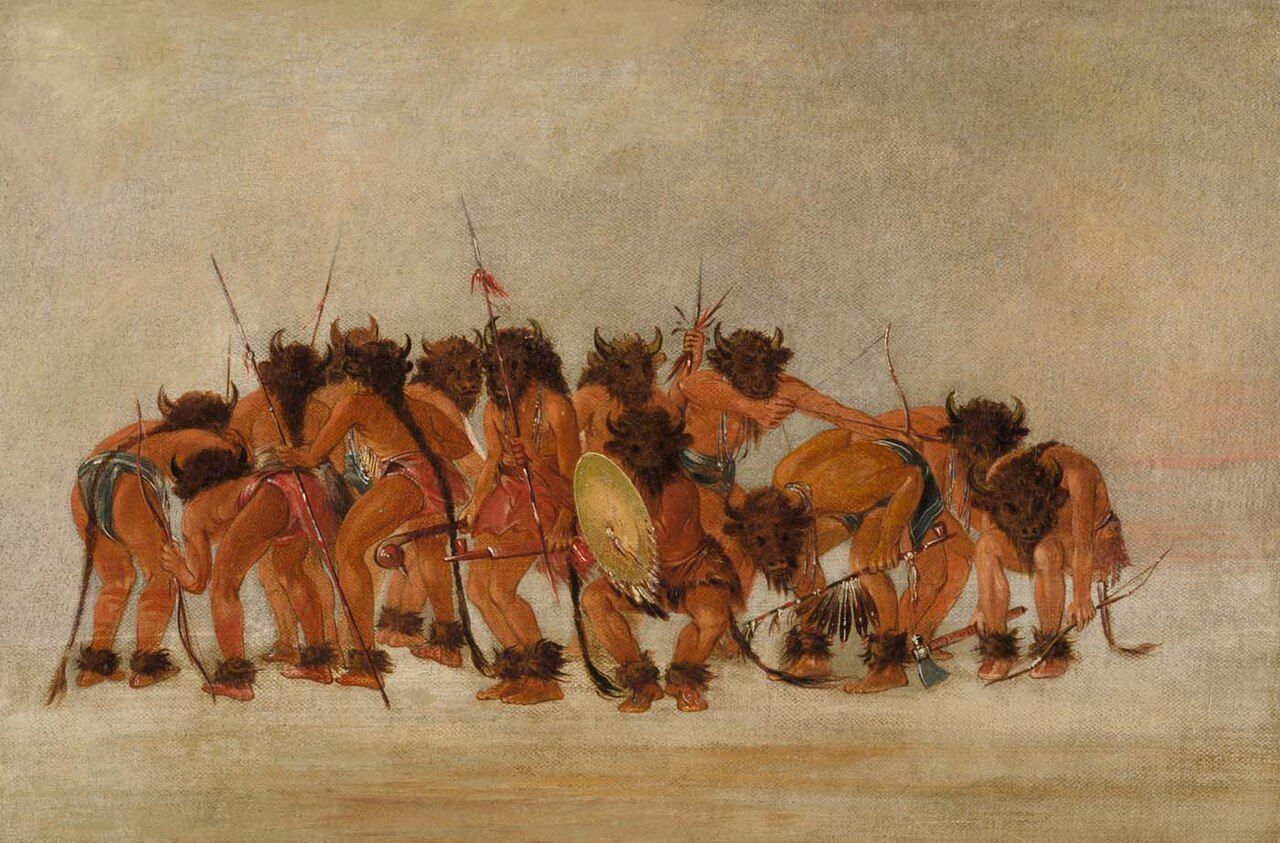
A chief dances for the courage of his young men while they are away hunting, and goes on dancing after the hunt is over. Michael Dummett asked whether that last dance must be irrational, and concluded that it need not be.
The view
Dummett, Wykeham Professor of Logic at Oxford and one of the leading philosophers of language of his century, wrote "Bringing About the Past" (Philosophical Review, 1964). His example is a tribe whose young men go on a lion hunt: two days' journey out, two days hunting, two days back. Throughout, the chief dances to make them brave. He has noticed over many years that when he dances, the hunters behave bravely, and when he does not, they tend not to.
On the last two days, the hunt is over. Whatever the young men did, they have done. Should the chief stop dancing? Dummett's answer is that it is not irrational for him to go on, provided two conditions hold. He must have good evidence of the correlation between dancing and bravery. And he must have no way of finding out, before he decides, whether they were brave. If a reliable messenger arrived and told him they had been cowards, it would be absurd to dance for their courage.
The argument
The usual objection is that the past is fixed, so nothing done now can make any difference to it. Dummett replies that the future is fixed in the same sense: it will be whatever it will be, and we still act to bring things about. What makes the difference is knowledge. We can act to affect what we do not yet know, and the past is normally known or knowable. Where it is not, the objection loses its grip.
Each click is one year. The correlation is built in; what matters is whether acting on it is rational.
Where he meets Deutsch
Both deny that the past is closed to action because it has already happened. For Dummett the past and future are alike in being fixed and alike in being open to influence; Deutsch says that changing the past, if we ever gain access to it, would mean exactly what changing the future means. Deutsch also names Dummett as one of the few philosophers to take the knowledge paradox seriously, the worry that a time loop could deliver knowledge that nobody created. Dummett returned to time loops in an essay of 1986, "Causal Loops", in a collection edited by Raymond Flood and Michael Lockwood.
Where he parts from Deutsch
Dummett's chief does not travel. He sits in his own history and influences an earlier part of it, which must already contain whatever his dancing brings about. That is a single history with a backward thread in it, and it carries the condition that the past be unknown. Deutsch's traveller needs no such condition. She can know exactly what happened in the past she remembers, arrive, and make things go differently, because the past she arrives in is not the one she remembers.
| Dummett | Deutsch | |
|---|---|---|
| Is travel into the past possible? | He does not discuss machines. Acting now to bring about the past is coherent, under strict conditions. | Not yet known. General relativity allows closed timelike curves; whether the full laws of physics do waits on a quantum theory of gravity. |
| What happens if you try to change the past? | You cannot bring about what you already know did not happen. Affecting the past requires not knowing it. | You cannot change your own past, because you never arrive in it. In the past you do reach, you can do as you choose, and history there goes differently. |
| Where does the traveller arrive? | No one arrives anywhere. The influence runs backwards; the agent stays put. | In another universe of the multiverse, at an earlier time: a past that differs from your own from the moment you arrive. |
| What resolves the paradoxes? | Conditions on knowledge: the past can be affected only where it cannot be found out in advance. Deutsch notes that Dummett took the knowledge paradox seriously. | Quantum theory applied to the loop. The multiverse as a whole is always consistent, and any knowledge a traveller brings was created by someone. |
Further reading
- Michael Dummett, "Bringing About the Past", Philosophical Review (1964), reprinted in his Truth and Other Enigmas (1978).
- Michael Dummett, "Causal Loops", in Raymond Flood and Michael Lockwood (eds), The Nature of Time (1986).
- Huw Price, Time's Arrow and Archimedes' Point (1996), which develops Dummett's ideas; see Price.